
Spaced practice
Also called: Distributed practice, Spacing effect, Spaced repetition
What it means
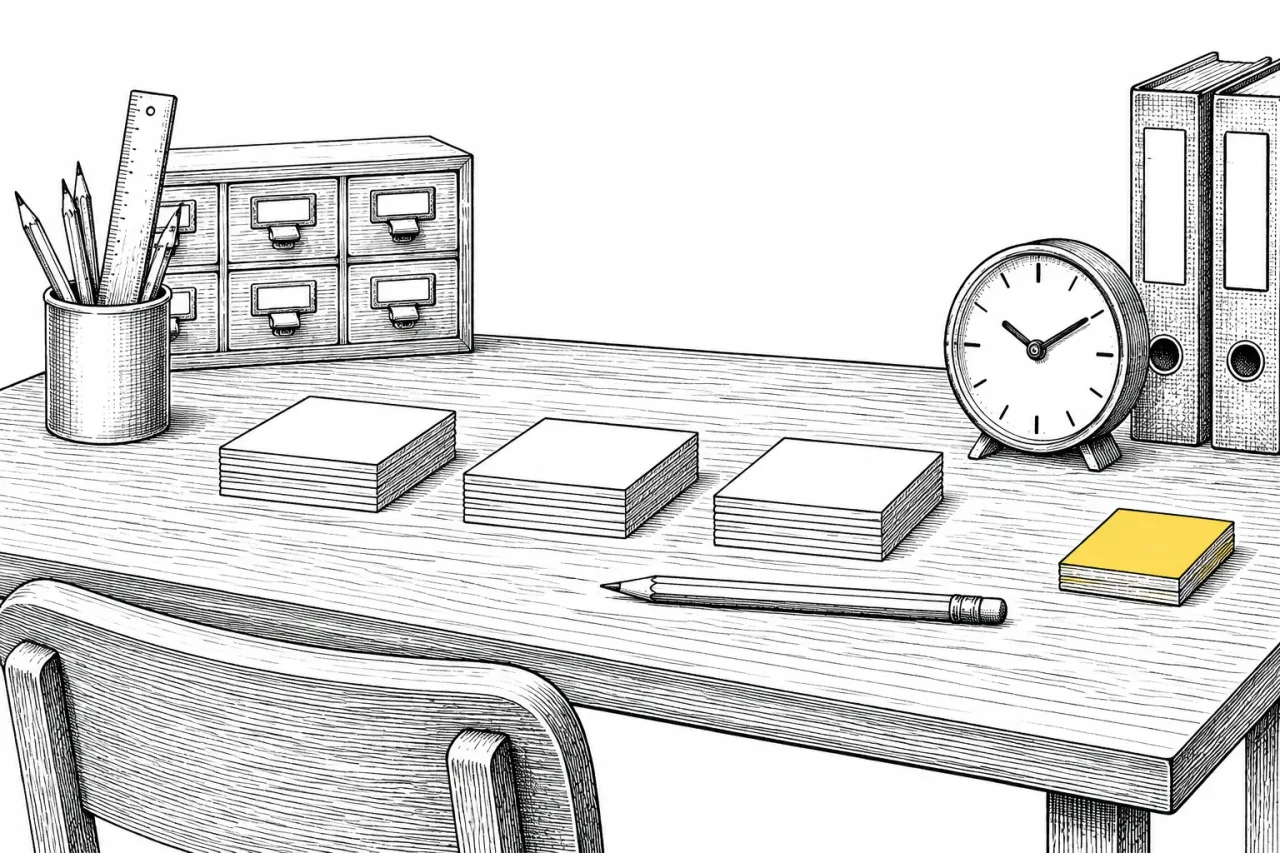
Spaced practice is going back to the same material in several short sessions, with gaps between them. A topic taught on Monday comes back the following week, then a month later. Massed practice packs all the work into one stretch, such as a cramming session the night before a test.
The gaps let pupils forget a little. Each return then asks them to pull the answer from memory, and that effort is what the method relies on.
What it looks like in daily life
- A Year 9 maths teacher opens every lesson with five questions. Two cover today’s unit and three come from earlier terms.
- A history department sets a low-stakes quiz each Friday that mixes this half term’s content with last term’s.
- A pupil revising for GCSE science studies one topic for 20 minutes on four separate evenings, instead of for two hours on one.
In each case the material comes round again after a delay, and the pupil has to recall it before looking anything up.
What tends to help
Plan the returns when you write the scheme of work. Put a date on each one, or it will slip when the term gets busy.
Short questions suit spaced practice because pupils must recall the answer rather than reread notes. Mix old topics in with new ones, keep the stakes low, and look at which questions the class gets wrong so you know what to bring back sooner.
A quiz tool can hold the question banks. Carousel Learning has a free Silver plan with unlimited private question banks and 4 quizzes a week. Pupils self-mark and the teacher checks. The quiz tools list covers other options, including ones that use AI. If you let AI write the questions, read and check them before pupils see them.
If pupils enter data into a tool, follow your school’s data protection policy and use tools the school has approved.
Where the term comes from
The idea goes back to the 1880s, when the German psychologist Hermann Ebbinghaus studied how quickly people forget lists of syllables. Later researchers described the finding as the spacing effect. Teachers now use “spaced practice” for the classroom habit built on it.